
Snowbound, Pure White, Chantilly Lace: Picking a Crisp White
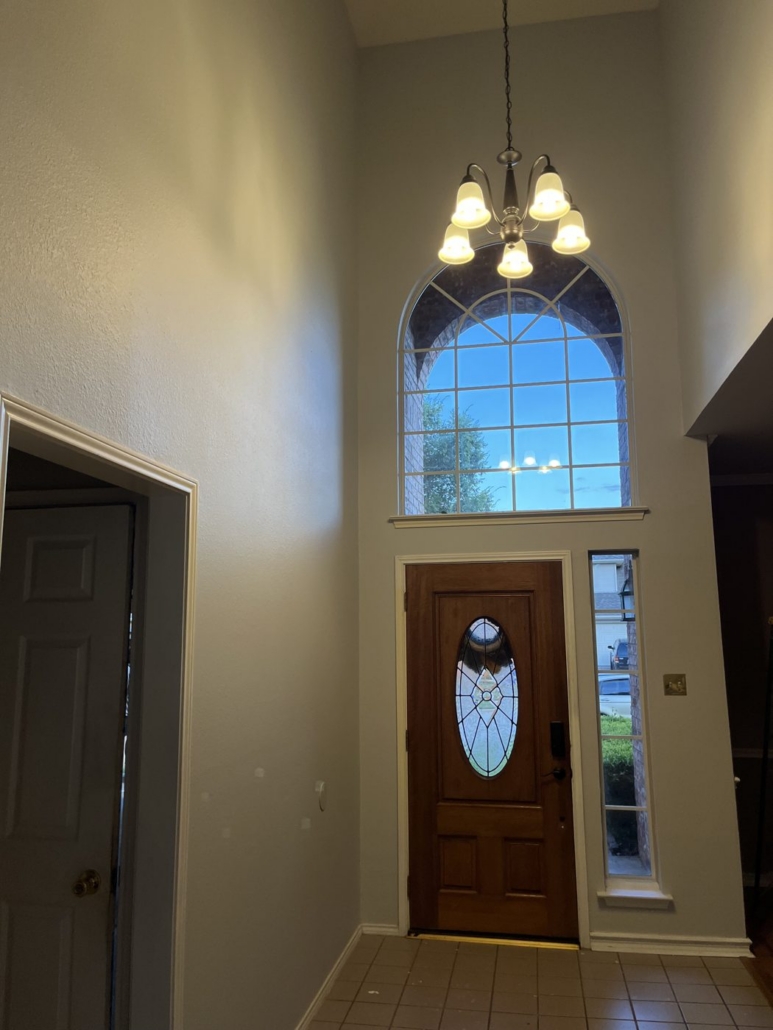
When a client wants a white that reads white, not cream, the conversation at Stellar Painting usually comes down to three: Sherwin-Williams Snowbound, Sherwin-Williams Pure White, and Benjamin Moore Chantilly Lace. All three are crisp, and they are not interchangeable. Here is how they differ, where each works in Fort Worth homes, and the rooms where a crisp white becomes a cold one.
Pure White
A clean white with just enough warmth to keep it from looking blue, and almost no visible undertone in most light. It is one of the most versatile trim and cabinet whites because it sits comfortably next to both warm and cool wall colors. On walls it is bright and neutral; in a north-facing room it can feel slightly flat, and in a sunny room it is clean rather than glaring.
Snowbound
Slightly softer than Pure White, with a faint gray undertone and, in some light, a hint of pink or mauve. That trace of gray makes it a good wall white in bright rooms where a purer white would feel stark, and a good trim white next to cool grays. Against a very warm cream it can look a touch dingy, and against a strong warm wood floor the pink note can show.
Chantilly Lace
The brightest and cleanest of the three, with a very slight cool undertone. It is a designer favorite for trim, ceilings and modern interiors where the goal is a gallery-like white. On walls in a room with lots of daylight it is luminous; in a dim room or under warm bulbs it can read cold and blue-gray. It makes almost any other white next to it look yellow, so it is a commitment.
Which one where
- Trim and cabinets with warm or neutral walls: Pure White.
- Walls in a bright, sunny room, with cool or gray accents: Snowbound.
- Modern, high-light spaces, white-on-white schemes, ceilings: Chantilly Lace.
- Whole-house wall white in mixed light: Pure White is the safest crisp choice; a warm white like Alabaster is the safest overall.
Crisp whites and Texas light
North Texas daylight is strong and warm, which is good news for crisp whites: it keeps them from going cold in south- and west-facing rooms. The rooms to watch are north-facing ones and interior rooms lit mostly by lamps, where a cool-leaning white turns gray or blue. There, step toward a warmer white or add warmth through lighting.
Pairing whites with whites
A white-wall, white-trim, white-ceiling scheme can look crisp or chaotic. It looks crisp when the whites share an undertone and differ by sheen and a small step in brightness: for example, Pure White on walls in matte, Pure White on trim in satin, and the same or Chantilly Lace on the ceiling in flat. It looks chaotic when a warm white wall meets a cool white trim.
Exterior use
All three work on exterior trim; Pure White and Snowbound are more forgiving against brick and stone. For a full white exterior in full sun, a slightly softer white often photographs and lives better than the brightest option.
Sampling crisp whites
Because the differences are small, sample large: two coats on big boards, side by side, viewed against your floor, counters and trim at different times of day. Put a true-white sheet of printer paper next to them to see each one’s lean.
Three rooms, three answers
A south-facing kitchen with white quartz counters and brass hardware: Chantilly Lace on the cabinets, Pure White on the walls, and the room reads bright and clean all day. A north-facing primary bedroom with gray carpet: Snowbound on the walls to keep the white from going cold, with Pure White trim. A whole-house interior in a home with warm oak floors and mixed exposures: Pure White throughout, because it holds steady where the other two tip warm or cool. The same three whites, placed where their undertones help rather than fight.
Let us narrow it with you
Stellar Painting’s color consulting is part of every project across Fort Worth and the surrounding cities. Call (682) 233-3748 or schedule a free estimate.

